

makrisforensics@gmail.com
Phone
+30 210 5320 120
+30 697 7597 980
+30 697 7597 980
Website
makrisforensics.gr
Address
49, Kiprion Agoniston
PC 12462, Athens, Greece
PC 12462, Athens, Greece

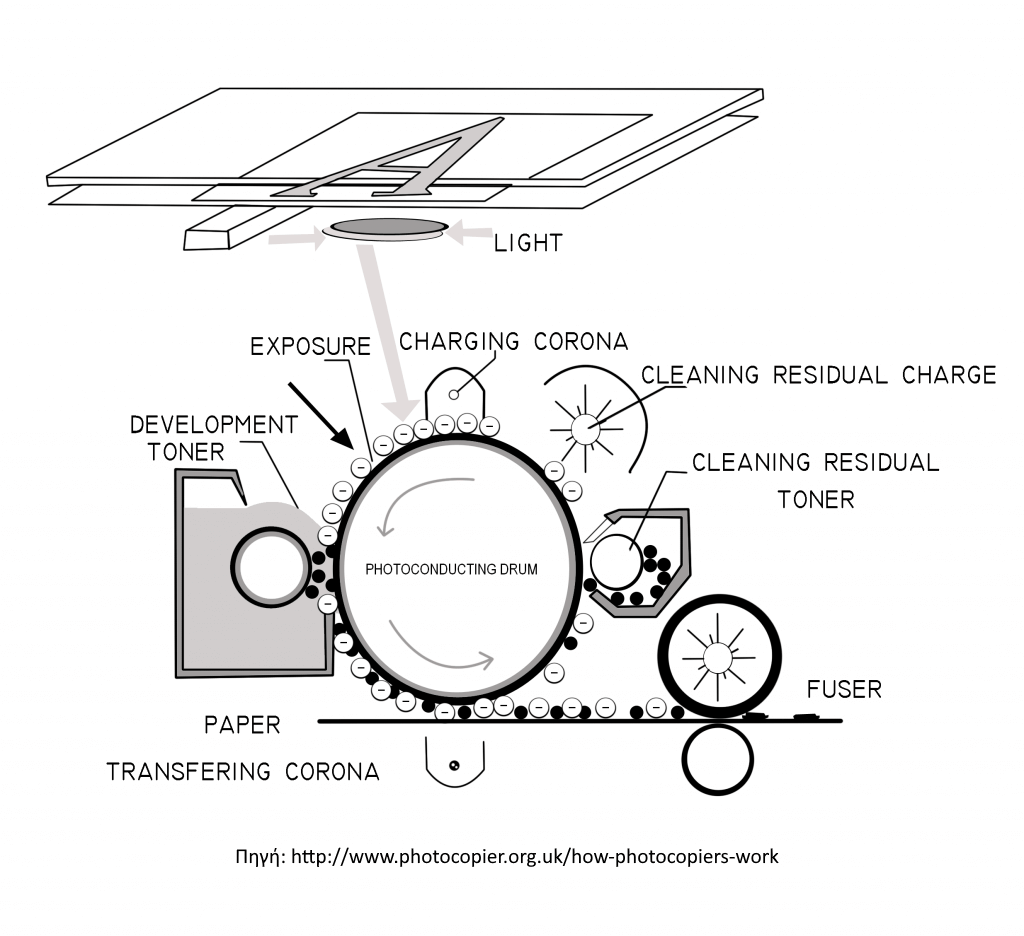
As a laboratory (www.makrisforensics.gr) we have recently dealt with two [2] cases that had photocopies as disputed evidence, in one case photocopies of cheques (of non-verified "generation" and without certification of the authenticity of the photocopy) and in the other case photocopies of many -draft- pages with handwritten notes and numerical amounts, where -in both cases- their authenticity had to be verified.
In the 1st case (in the criminal part of the case) we were asked to verify the authenticity of the signatures of the "issuer" and of the "1st endorser" of the cheques, while in the other [2nd case -of the rough notes-] to verify whether what was written (i.e. the amounts and the handwritten notes) are true and have not been counterfeited, so that the amounts look extortionate and therefore - and only for this reason - they can justify large fines and other ancillary penalties or consequences, from the tax authorities.
According to my view, given my many years of experience both in the Police Crime Lab and as a private expert, photocopies do not provide "safe" data, the evaluation of which can establish a strong graphic (forensic) conclusion that correlates - with certainty (I underline it) - the photocopies in question [1] either with specific people or “situations”.
This is because photocopies are produced by the process of photocopying the image of the displayed document (from a "source" as "original"), which is usually reproduced at a resolution of 300dpi (rarely of 600dpi), without the photocopying product being able to provide all those critical graphic elements that can prove the authenticity and genuineness of the signs they display.
Which are the graphic elements that cannot be found in the photocopy?
Unfortunately, even today not a few "experts" believe that some of the above findings can actually be obtained even from photocopies!
To the contrary, there are judges (fortunately few) who accept, easily and without hesitation, the confirmatory "conclusions" from photocopies, which are largely based on unproven graphic findings and they are thus lead - in many cases - to either incorrect or not sufficiently justified legal "findings", i.e. to stale conclusions of graphical correlation or exclusion, in the wrong direction.
We must keep in mind that forgers are -almost always- cautious, first of all by making sure that they are being diligent, and always want to deceive those who will try to "assess" the document they "fabricated", either "at first glance" or when they examine it as "experts".
The common approach - which is wrong - by many "experts" of examining photocopies and drawing conclusions, covered by the inventive phrase:
"The following are stated subject to the examination of the original"
not only does it not help the judge, on the contrary it misleads him/her, forming - in many cases - a fictitious conviction, the result of which is erroneous decisions.
Laboratory experiments - in real cases - have shown - beyond any reasonable doubt - that anything can have happened in photocopies, either by modifying previous photocopies (of previous "generations") - forgery in photocopy and photocopying again - or by modifying documents made from scratch false (forgery and photocopying of the forged document) or by falsifying genuine documents to make false ones (falsification and production of photocopies) etc.
Such is the variety of actions that can be performed by any would-be ephemeral or systematic forger, which is impossible to predict them in the context of this report.
Questions for evaluation and reflection:
[1] with the exception of a few cases which mention the "defects" of the photocopying process and the "code" of colour photocopiers [Machine Identification Code]